Table of Contents
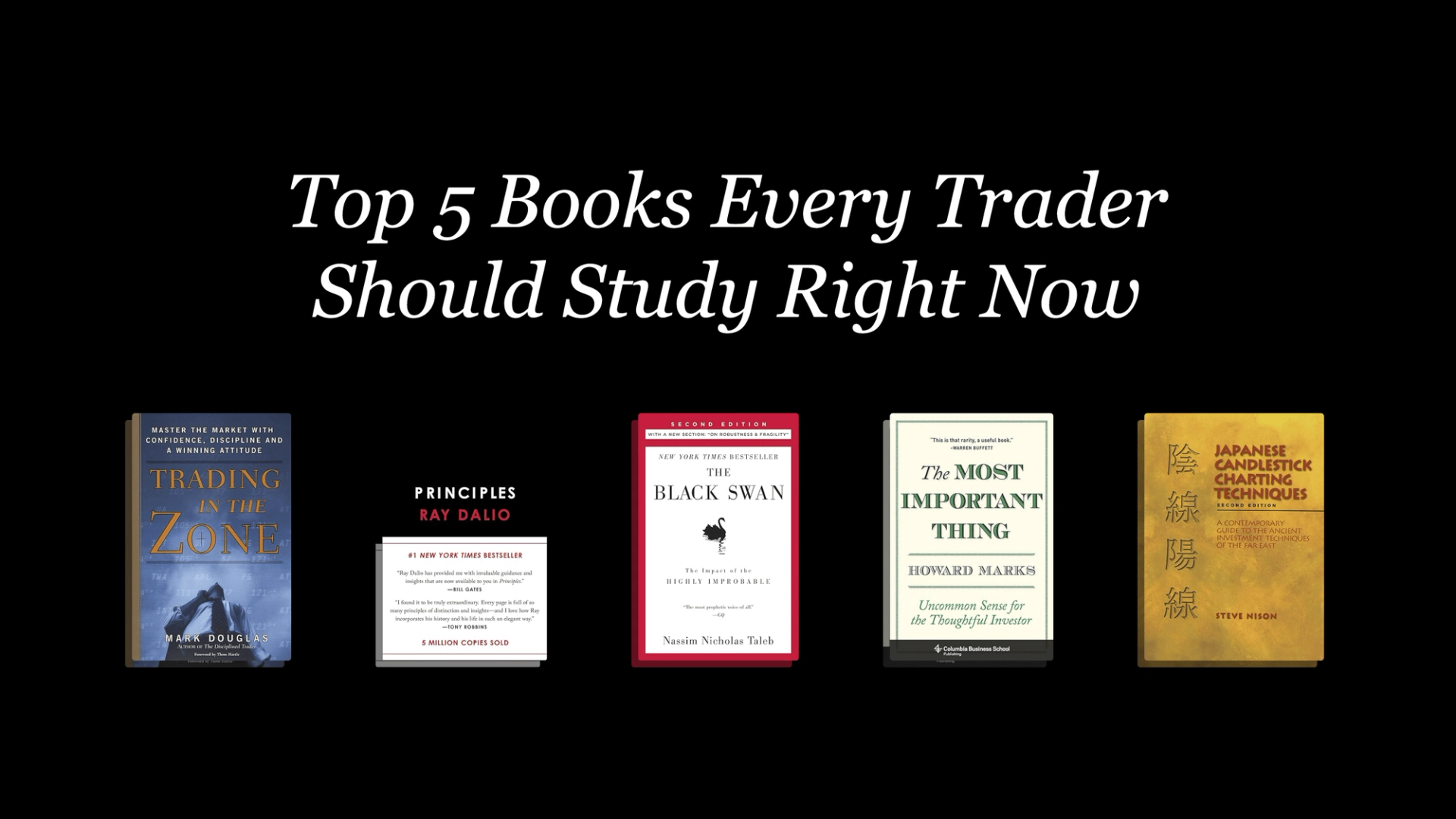
Serious traders are made in the hours away from the screen. The five books below have shaped how professional traders think about risk, psychology, pattern recognition, and market reality. Whether you trade stocks, options, futures, forex, crypto, or more, these are the reads that will change the quality of your decisions.
Which books do the best traders actually study?
The books on this list are not generic investing primers. They are the texts that serious day traders, swing traders, and investors return to again and again because the lessons compound over time. Read them in any order, but read all five.
1. The Most Important Thing - Howard Marks
Howard Marks is the founder of Oaktree Capital and one of the most rigorous thinkers in markets. The Most Important Thing is built around his concept of second-level thinking: the idea that obvious conclusions are already priced in, and that consistently profitable decisions require you to think differently from the crowd - not just correctly.
Marks breaks down risk in a way most trading books completely ignore. Risk is not volatility. It is the probability of permanent loss. That reframing changes how you size positions, when you press a trade, and when you hold back. His chapter on the psychology of markets - cycles of greed, fear, and irrationality - maps directly onto what you see in intraday price action as much as in long-term cycles.
If you use AI analysis on your own trade journal and keep finding the same pattern of overtrading at the top of your winning streaks, Marks explains exactly why that happens and how to stop it.
Key takeaway: Most traders focus on what to buy. Marks teaches you to focus on what the market is pricing in - and whether the crowd is right.
2. Japanese Candlestick Charting Techniques - Steve Nison
Steve Nison introduced candlestick charting to Western traders in the early 1990s. Decades later, this book remains the definitive reference. It covers dozens of single-candle and multi-candle formations - doji, hammer, engulfing, morning star, harami, and more - with the historical and structural reasoning behind each one.
Pattern recognition is a skill, not an instinct. Nison's explanations go beyond memorizing shapes. He connects each pattern to the psychology of buyers and sellers in the moment the candle forms - who was in control, who lost it, and what that means for the next session.
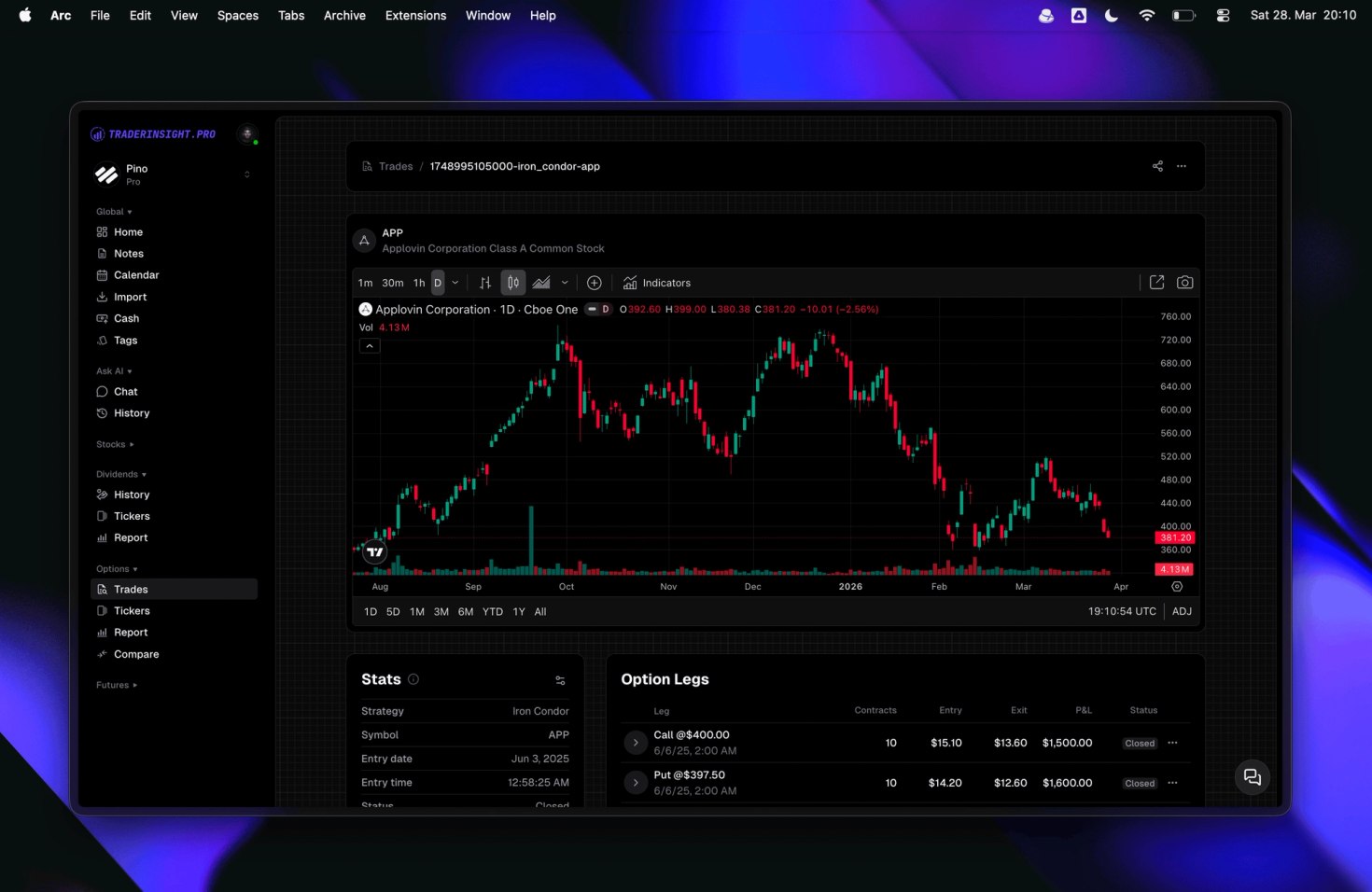
For traders reviewing their charts in TraderInsight.pro's TradingView-integrated charts, this book gives you the vocabulary and the analytical framework to tag entries and exits with precision using strategy tags, not just instinct.
Key takeaway: You cannot improve what you cannot name. Nison gives you the language to label what you're actually seeing in price action.
3. The Black Swan - Nassim Nicholas Taleb
Nassim Taleb's The Black Swan is the most uncomfortable book on this list - and the most important for risk management. Taleb's argument is simple and devastating: the events that matter most in markets are the ones that models say cannot happen. Normal distributions fail to capture the reality of fat tails, and most traders size their risk as if catastrophe is impossible.
Every trader eventually meets their Black Swan. A gap open that blows through a stop. A circuit breaker halt. A macro event that renders a setup irrelevant. The question is not whether these events will occur but whether your position sizing and risk management will survive them.
Taleb does not offer a trading system. He offers something more valuable: a framework for thinking about what you do not know. Pair this with honest performance reports on your own data and you will find the hidden tail risks in your own strategy faster than any back-test can.
Key takeaway: Your worst drawdown has not happened yet. Plan accordingly.
4. Principles - Ray Dalio
Ray Dalio built Bridgewater Associates into the largest hedge fund in the world using a set of explicit, documented decision-making principles. Principles is the book where he shares them. It covers his philosophy on radical transparency, systematic decision-making, and the importance of building feedback loops into every process.
Most traders make decisions inconsistently. Dalio's framework treats every trade, every mistake, and every success as data that should update your rules - not just your mood. His approach to identifying patterns in failure maps directly onto journaling practice: write down what happened, find the root cause, update the principle, test it again.
That loop is exactly what TraderInsight.pro's tagging system and trade notes are built to support. Dalio's book gives you the philosophy; the journal gives you the mechanism.
Key takeaway: Trading without documented principles is just gambling with steps. Build your rules, track them, and refine them with data.
5. Trading in the Zone - Mark Douglas
Mark Douglas wrote the definitive book on trading psychology. Where Marks covers market cycles and Taleb covers risk, Douglas goes directly inside the trader's mind. Trading in the Zone explains why traders who understand a strategy perfectly still fail to execute it - and what mental frameworks create consistency.
Douglas identifies the core problem: traders treat every trade as unique, respond emotionally to recent outcomes, and break their own rules under pressure. His concept of "thinking in probabilities" - accepting that no single trade result defines your system - is the mindset shift that separates consistent performers from emotional traders.
Combined with an honest look at your own data using comparison reports and the trading calendar, Douglas's framework becomes actionable rather than theoretical. When you can see that your Friday afternoon win rate collapses, his psychology framework explains exactly what is happening in your decision-making.
Key takeaway: Execution failure is almost always a psychology problem, not a knowledge problem. This book fixes the knowledge gap around psychology.
How to get the most from these books as a trader
Reading is not enough. The traders who compound knowledge into real improvement treat every book as a source of hypotheses to test against their own data.
When Marks talks about risk asymmetry, pull your performance reports and check whether your losing trades are clustered around specific conditions. When Douglas explains probability thinking, tag your trades by setup and review your actual win rate per setup over 50+ occurrences using TraderInsight.pro's AI analysis. When Dalio talks about radical transparency, write honest trade notes immediately after every session - not just on losing days.
The gap between a trader who reads and a trader who improves is the journal. Every insight from these five books becomes a testable rule when you have clean, structured trade data behind it.
Start your trading journal and put these books to work.
FAQ
What is the best trading book for psychology?
Trading in the Zone by Mark Douglas is the most focused and practical trading psychology book available. It directly addresses execution failure, emotional decision-making, and consistency - the three psychological problems most traders never resolve.
Is The Black Swan relevant for short-term traders?
Yes. Taleb's framework on tail risk and position sizing applies to any time frame. Day traders and swing traders face Black Swan events in the form of halt gaps, flash crashes, and sudden macro news. Tail risk management is not just a long-term concern.
What trading books do professional traders recommend?
The most consistently cited books among professional traders are The Most Important Thing (Howard Marks), Trading in the Zone (Mark Douglas), Principles (Ray Dalio), and The Black Swan (Nassim Taleb). Technical traders also frequently reference Japanese Candlestick Charting Techniques (Steve Nison) for pattern work.
How do I apply what I learn from trading books?
Apply book insights as testable hypotheses in your trading journal. Use strategy tags to label trades by setup, review performance reports for patterns, and use AI analysis to surface conclusions your reading suggested. A hypothesis without data behind it is just a belief.
Which of these books should I read first?
Start with Trading in the Zone if your main problem is execution and consistency. Start with The Most Important Thing if your main problem is risk management and position sizing. Read The Black Swan before you ever size a position at maximum risk again.